
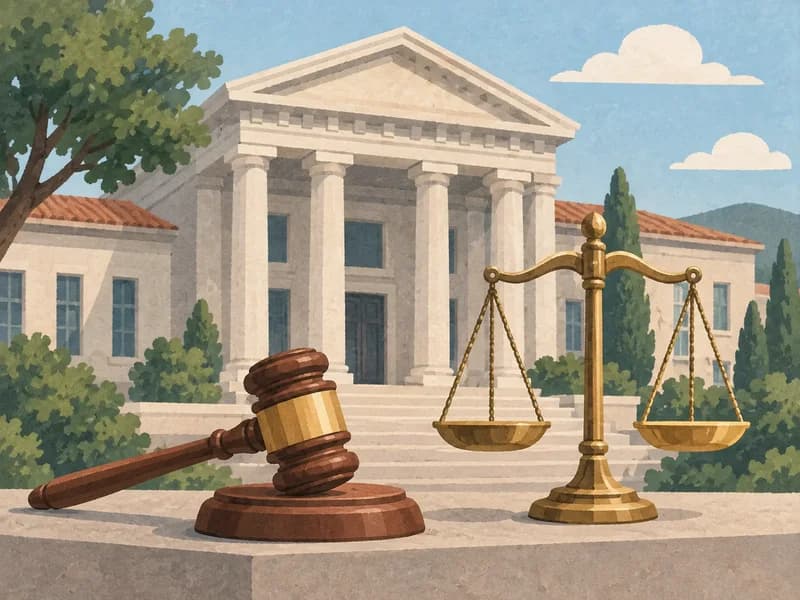
Law court
Law court has 29 English words, such as acquit, affidavit, appeal, and arrest. Learn them with pictures, IPA, meanings and example sentences.
What you'll gain
All 29 words in Law court
acquit/əˈkwɪt/
To officially state in a court of law that someone is not guilty of a crime.
affidavit/ˌæfɪˈdeɪvɪt/
An affidavit is a written statement confirmed by oath or affirmation, for use as evidence in court.

appeal/əˈpiːl/n
n. request, petition, attractiveness, charm; v. request, plead, attract, charm

arrest/əˈrest/v
v. detain, capture, halt, stop; n. detention, capture, halt, stop

client/ˈkɫaɪənts/n
n. customer, patron; n. user, terminal

complaint/kəmˈpleɪnt/n
n. grievance, protest; n. accusation, claim
convicted/kənˈvɪktɪd/
Declared officially in a court of law to be guilty of a crime.

crime/kraɪm/n
n. illegal act, offense, wrongdoing, misdeed
cross-examination
The formal questioning of a witness by the opposing lawyer in court, usually to challenge the witness's evidence or credibility.
During cross-examination, the lawyer exposed inconsistencies in the witness's testimony.
cross-examine
To question a witness in court, especially by the opposing lawyer, in order to test their evidence.
During the trial, the defense lawyer will cross-examine the witness about her timeline.

deception/dɪˈsɛpʃən/
n. deceit, fraud, trickery, illusion
deposition/ˌdɛpəˈzɪʃən/
Deposition is the process of giving sworn testimony outside of court before a trial takes place.

dispute/dɪˈspjuːt/n
n. disagreement, argument; v. argue, debate

evidence/ˈevɪdəns/n
n. proof, testimony
grand jury
A group of citizens that examines evidence to decide whether there is enough to formally charge someone with a crime.
The grand jury reviewed the evidence and issued an indictment.

honest/ˈɑːnɪst/
adj. truthful, sincere, deceit-free, not lying
impeachment/ɪmˈpiːt͡ʃmənt/
n. removal from office, accusation of wrongdoing
indictment/ɪnˈdaɪtmənt/n
An indictment is a formal charge or accusation of a serious crime made by a grand jury.

judgment/ˈd͡ʒʌd͡ʒmɪnt/
n. discernment, decision-making, ruling, verdict
jurisdiction/ˌdʒʊrɪsˈdɪkʃn/n
n. legal authority, court power

justify/ˈdʒʌstɪfaɪ/v
v. show, prove, declare, make righteous
magistrate/ˈmædʒɪstreɪt/n
A civil officer who administers the law, especially one who acts as a judge in a lower court.
oath/ˈoʊθ/
An oath is a formal, serious promise, often made in front of God or on a holy book.

plead/pliːd/v
v. to appeal, to beg, to argue, to defend

proof/pruːf/
n. test, trial, evidence, argument; v. establish, validate; adj. resistant, durable
prosecute/ˈprɒsɪkjuːt/v
To officially accuse someone of a crime and try them in a court of law.
retraction
A retraction is a public withdrawal or correction of something previously stated or published.
The newspaper issued a retraction after discovering that the story contained false information.

sincere/sɪnˈsɪr/
adj. saying or doing what you really feel or believe; honest and not pretending.
verdict/ˈvɝdɪkt/n
n. court decision, judicial ruling, opinion, judgment