
Musical instruments
Musical instruments has 41 English words, such as accordion, bagpipes, banjo, and bass drum. Learn them with pictures, IPA, meanings and example sentences.
What you'll gain
All 41 words in Musical instruments
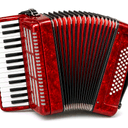
accordion/əˈkoɹdiən/
An accordion is a portable musical instrument with a keyboard and bellows that produces sound by forcing air through reeds.
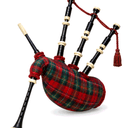
bagpipes
a musical instrument with a bag that is filled with air and connected to pipes that produce sound
The musician played the bagpipes at the festival.
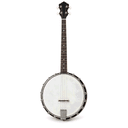
banjo/ˈbænd͡ʒoʊ/
A musical instrument with a round body and a long neck, usually having four or five strings.
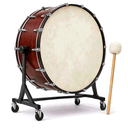
bass drum
a large drum that produces a deep, low sound, usually played with a pedal or a mallet.
The drummer struck the bass drum at the start of the parade.
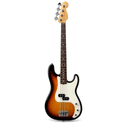
bass guitar
a guitar with a low range of notes, usually used to provide the rhythm and foundation of a band’s music
She plays the bass guitar in a jazz band.
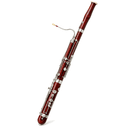
bassoon
a large woodwind instrument with a long, curved body that produces a deep, rich sound
The bassoon added a warm, deep sound to the orchestra.
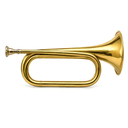
bugle/ˈbjuːɡəl/
A bugle is a brass instrument like a small trumpet, without valves, used for military calls.
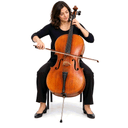
cello/ˈt͡ʃɛloʊ/
A large wooden string instrument that you play sitting down by holding it between your knees and drawing a bow across the strings.
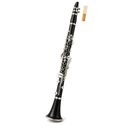
clarinet/ˌklæɹɪˈnɛt/
A musical instrument of the woodwind family that is played by blowing air across a single reed.
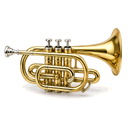
cornet
A cornet is a small brass instrument with valves, similar to a trumpet but with a rounder shape and a softer sound.
Maya played the cornet in the school band.
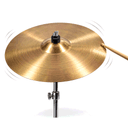
cymbal
A cymbal is a thin, round metal plate that is struck with a stick or another cymbal to make a loud musical sound.
The drummer struck the cymbal at the end of the song.
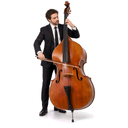
double bass
A double bass is the largest bowed string instrument in an orchestra and produces the lowest musical pitches.
The musician tuned the double bass before the orchestra rehearsal.
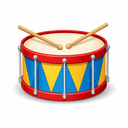
drum/drʌm/
n. percussion instrument, musical instrument; v. to beat, to strike
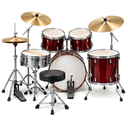
drum kit
a group of drums and cymbals arranged for one person to play
The drummer set up the drum kit before the concert.
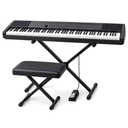
electronic keyboard
a musical keyboard instrument that produces sounds electronically
She practiced the melody on an electronic keyboard before the concert.
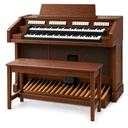
electronic organ
a keyboard instrument that produces electronic sounds and is designed to imitate a pipe organ
The church replaced its old pipe organ with an electronic organ.
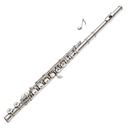
flute/flu(ː)t/
A flute is a long, thin musical instrument that you blow across to make a sound.
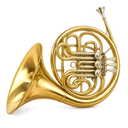
french horn
a brass musical instrument with a long, coiled tube and a wide bell, played by blowing into a mouthpiece
She played the french horn in the school orchestra.
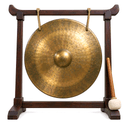
gong/ɡɔŋ/
A large metal disc that makes a deep ringing sound when struck with a mallet.
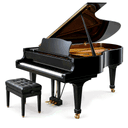
grand piano
a large piano with a horizontal, wing-shaped case and strings that extend away from the keyboard
She played a beautiful melody on the grand piano during the concert.
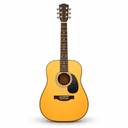
guitar/ɡɪˈtɑːr/
n. a musical instrument with six strings and a long neck, played by plucking or strumming the strings.
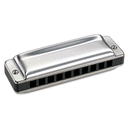
harmonica/ˌhɑɹˈmɑnɪkə/
A small musical instrument that you play by blowing air into and out of it with your mouth.
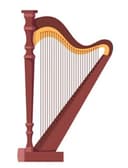
harp/hɑɹp/
A large musical instrument with strings stretched in a triangular frame, played by plucking with the fingers.
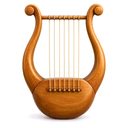
lyre
a small ancient stringed musical instrument with two curved arms and a crossbar, played by plucking its strings
In the museum, we saw an ancient lyre with seven strings.
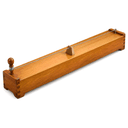
monochord
A musical instrument with one string stretched over a resonating box, used to study musical intervals and pitch.
The music student used a monochord to hear how changing the string length altered the pitch.
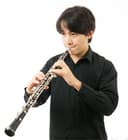
oboenoun
n. a woodwind instrument shaped like a narrow tube, played by blowing through a double reed.
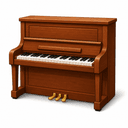
piano/piˈænoʊ/
n. a large musical instrument with a keyboard of black and white keys, played by pressing the keys with the fingers.
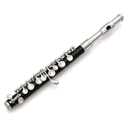
piccolo
A piccolo is a small flute with a very high, bright sound.
The piccolo added a bright, high melody to the marching band's music.
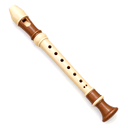
recorder/ɹiˈkɔɹdəɹ/
A recorder is a simple woodwind instrument that you blow into, or an electronic device used to record sound, video, or data.
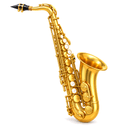
saxophone/ˈsæksəˌfoʊ̯n/
A curved metal wind instrument played by blowing into a single-reed mouthpiece and pressing keys.
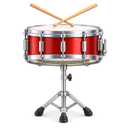
snare drum
a small drum with metal wires stretched across its bottom surface, producing a sharp, buzzing sound
The drummer played a sharp rhythm on the snare drum during the parade.
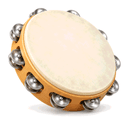
tambourine/ˌtæmbəˈɹiːn/
A tambourine is a small percussion instrument with metal jingles in the frame that you shake or hit to make a rhythm.
triangle/ˈtraɪæŋɡl/noun
n. a small percussion instrument made of a steel rod bent into a triangle and struck with a metal beater; n. a flat shape with three straight sides and three angles.
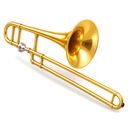
trombone
a brass musical instrument with a long sliding tube used to change the pitch of its notes
She plays the trombone in the school orchestra.
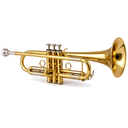
trumpet/ˈtɹʌmpɪt/
n. a brass musical instrument with three valves, played by blowing into it; v. (of an elephant) to make a loud call.
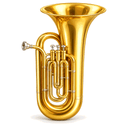
tuba
A tuba is a large brass musical instrument with a deep, low sound.
The musician played the tuba at the concert.
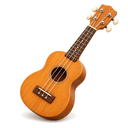
ukulele
A small, four-stringed musical instrument with a shape like a guitar.
Maya played the ukulele at the beach.
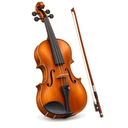
viola
A viola is a stringed musical instrument that is slightly larger than a violin and has a lower sound.
She plays the viola in the school orchestra.
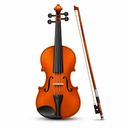
violin/ˌvaɪəˈlɪn/
A musical instrument with four strings, held under the chin and played with a bow.
xylophone
A musical instrument made of wooden bars of different lengths that are struck with small sticks to produce notes.
The children played a cheerful tune on the xylophone.
zither
a stringed musical instrument with strings stretched over a flat wooden body, played by plucking
She played a gentle melody on the zither during the evening concert.