
School
School has 63 English words, such as Form teacher, High school, Nursery school, and Primary school. Learn them with pictures, IPA, meanings and example sentences.
What you'll gain
All 63 words in School

Form teacher/fɔːm ˈtiː.tʃər/n. phr
A teacher who is responsible for a particular class of students, taking their register and looking after their general welfare.
Our form teacher told us about the upcoming school trip during morning registration.

High school/haɪ skuːl/n. phr
A school for students between the ages of 14 and 18, typically preparing them for college or future careers.
High school was a wonderful experience for him because he made many lifelong friends.
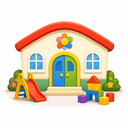
Nursery school/ˈnɜː.sər.i skuːl/n. phr
A school for young children, typically between the ages of three and five, before they start primary school.
Nursery school is a wonderful place where young children learn to play and share with others.
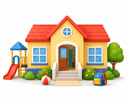
Primary school/ˈpraɪ.mə.ri skuːl/n. phr
A school for children between the ages of about five and eleven.
Children start Primary school at the age of five.
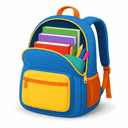
School bag/skuːl bæg/n. phr
A bag used by students to carry books, pens, and other school supplies.
He put his books and lunch into his school bag.

Secondary school/ˈsɛk.ən.dər.i skuːl/n. phr
A school for students between the ages of 11 and 18, which they attend after completing primary education.
Secondary school is compulsory for students up to the age of sixteen.

Vocational school/voʊˈkeɪ.ʃən.əl skuːl/n. phr
A school that teaches practical skills and trades needed for specific jobs.
After high school, he decided to attend a vocational school to learn automotive repair.
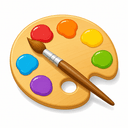
art/ɑːrt/
n. the making of paintings, drawings, and sculptures; n. a school subject in which pupils draw, paint, and make things.
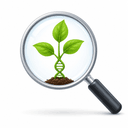
biology/baɪˈɑːlədʒi/n
n. the school subject and science that studies living things such as plants, animals, and the human body.
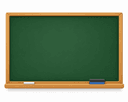
blackboard/ˈblækbɔːrd/
A large board with a smooth, dark surface, used in classrooms for writing on with chalk.
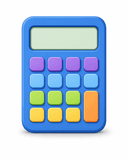
calculator/ˈkælkjuleɪtər/
An electronic device or computer program used for performing mathematical calculations.
certificate
an official document that confirms someone has completed a course or achieved a particular qualification
She received a certificate after completing the course.
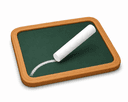
chalk/tʃɔːk/
n. a soft white or coloured stick used for writing on a blackboard; v. to write or draw with chalk.

chemistry/ˈkemɪstri/
n. science of matter, study of substances; n. emotional connection, personal chemistry

classmate/ˈklæsmeɪt/
n. schoolmate, fellow student
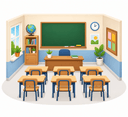
classroom/ˈklæsruːm/
n. a room in a school where a class of pupils is taught.

college/ˈkɑːlɪdʒ/
n. a place where students go to study after leaving school, often for a practical or professional course.
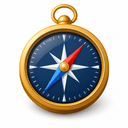
compass/ˈkʌmpəs/
n. a V-shaped instrument with two arms, used for drawing circles and measuring distances on a map; n. an instrument with a magnetized needle that shows the direction of north.

dean/diːn/
n. head of department, academic leader, church leader, religious official
degree/dɪˈɡriː/
n. unit of measurement, angle measurement, academic title, university qualification

economics/ˌɛkəˈnɑmɪks/
n. the school subject and science that studies how money, goods, and services are produced and used.

engineering/ˌendʒɪˈnɪrɪŋ/n
n. the school and university subject that studies how to design and build machines, roads, bridges, and other structures.
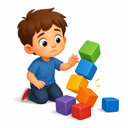
fail/feɪl/
v. to not succeed, to be unsuccessful, to omit, to not perform; n. a failure, an unsuccessful attempt
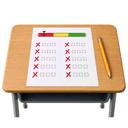
fail the exam
to receive a failing grade on an examination
If I don't study harder, I will fail the exam.

geography/dʒiˈɑːɡrəfi/
The study of the physical features of the Earth and its atmosphere, and how human activity affects these.
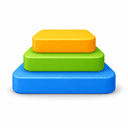
grade/ɡreɪd/
n. level, rank, score, mark; v. score, mark, arrange, classify
grading schedule
A plan showing when assignments or exams will be graded and when the grades will be finalized.
The professor posted the grading schedule so students would know when each assignment would be assessed.

graduate/ˈɡrædʒuət/
v. to complete studies, to finish education; n. degree holder, diploma recipient
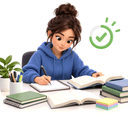
hard-working/ˌhɑːrd ˈwɜːrkɪŋ/adj.
A hard-working person puts a lot of effort and energy into their work.
history
The study and recorded account of events that happened in the past, especially those involving people and societies.
I enjoy learning about the history of ancient Rome.
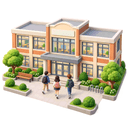
junior high school
a school for students between elementary school and high school, usually covering grades six through eight
My sister will start junior high school next year.

laboratory
a room or building equipped for scientific experiments and research
The students conducted an experiment in the laboratory.

lazy/ˈɫeɪziɝ/
adj. idle, slothful, inactive, lethargic

lecturer/ˈlektʃərər/
A person who gives lectures, especially at a university or college.
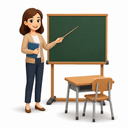
lesson/ˈlesn/
n. class, instruction, moral, teaching

library/ˈlaɪbreri/
n. a room or building where books are kept for people to read or borrow.

literature/ˈlɪtɚət͡ʃɚ/n
n. novels, poems, and plays, especially those regarded as having lasting artistic value, studied as a school subject.
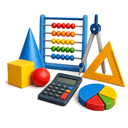
mathematics/mæθ(ə)ˈmætɪks/n
n. the school subject and science that deals with numbers, shapes, and measurements.

monitor/ˈmɑːnɪtər/
n. the screen of a computer, on which you see the pictures and text; v. to watch something carefully over a period of time.
pass/pæs/
n. in football and volleyball, a move in which a player sends the ball to a teammate; v. to succeed in a test or an exam; v. to go by.
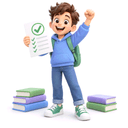
pass the exam
To achieve a high enough score to succeed in an examination.
I studied hard to pass the exam.
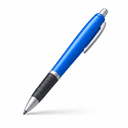
pen/pen/
n. writing instrument, ink tool; v. write, compose
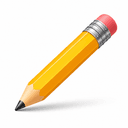
pencil/ˈpensl/
n. writing instrument, graphite stick
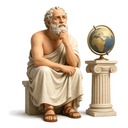
philosophy/fɪˈlɑsəfi/n
n. the study of the nature of knowledge, truth, and the meaning of life.
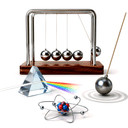
physics/ˈfɪzɪks/n
n. the school subject and science that studies matter, energy, force, and motion.
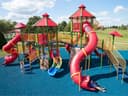
playgroundnoun
an outdoor area with equipment for children to play on
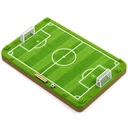
playing field
An area of land used for playing sports or games.
The children ran onto the playing field after school.

principal/ˈprɪnsəpl/
n. headmaster, leader, capital, fund; adj. main, chief
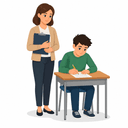
proctor/ˈprɑːktər/
n. exam supervisor, test administrator; v. to supervise an exam, to oversee a test

professor/prəˈfesər/
n. teacher, academic, expert, scholar
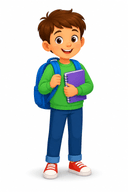
pupil/ˈpjuːpl/
A person, especially a child, who is being taught in a school, or the circular black area in the center of the eye that lets in light.
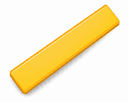
ruler/ˈruːlər/
A tool used to measure length and draw straight lines, or a person who rules a country.

scholarship/ˈskɑːlərʃɪp/n
n. grant, financial aid, academic study, research
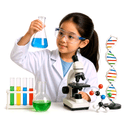
science/ˈsaɪəns/n
n. the study of the physical world through observation and experiment, including biology, chemistry, and physics.
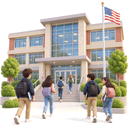
senior high school
A school for students usually in grades 10–12, after junior high school and before college.
After finishing junior high school, Mina entered senior high school.
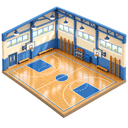
sports hall
a large indoor building used for playing sports
The school built a new sports hall for basketball and volleyball.

student/ˈstuːdnt/
n. pupil, learner

supervisor room
a room set aside for a supervisor to work, meet with people, or keep materials
Please leave the completed forms in the supervisor room.
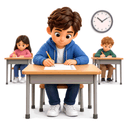
take the exam
to sit for or complete an examination
I need to take the exam before Friday.

teacher/ˈtiːtʃər/
n. instructor, educator

traditional room
A room designed or decorated in a customary style associated with a particular culture or time.
We sat in the traditional room and drank tea.

uniform/ˈjuːnɪfɔːrm/
adj. consistent, unvarying; n. outfit, dress

university/ˌjuːnɪˈvɜːrsəti/
n. a place where students study for a degree after leaving school, and where research is done.